Artificial Intelligence in Designing New Viruses
Overview
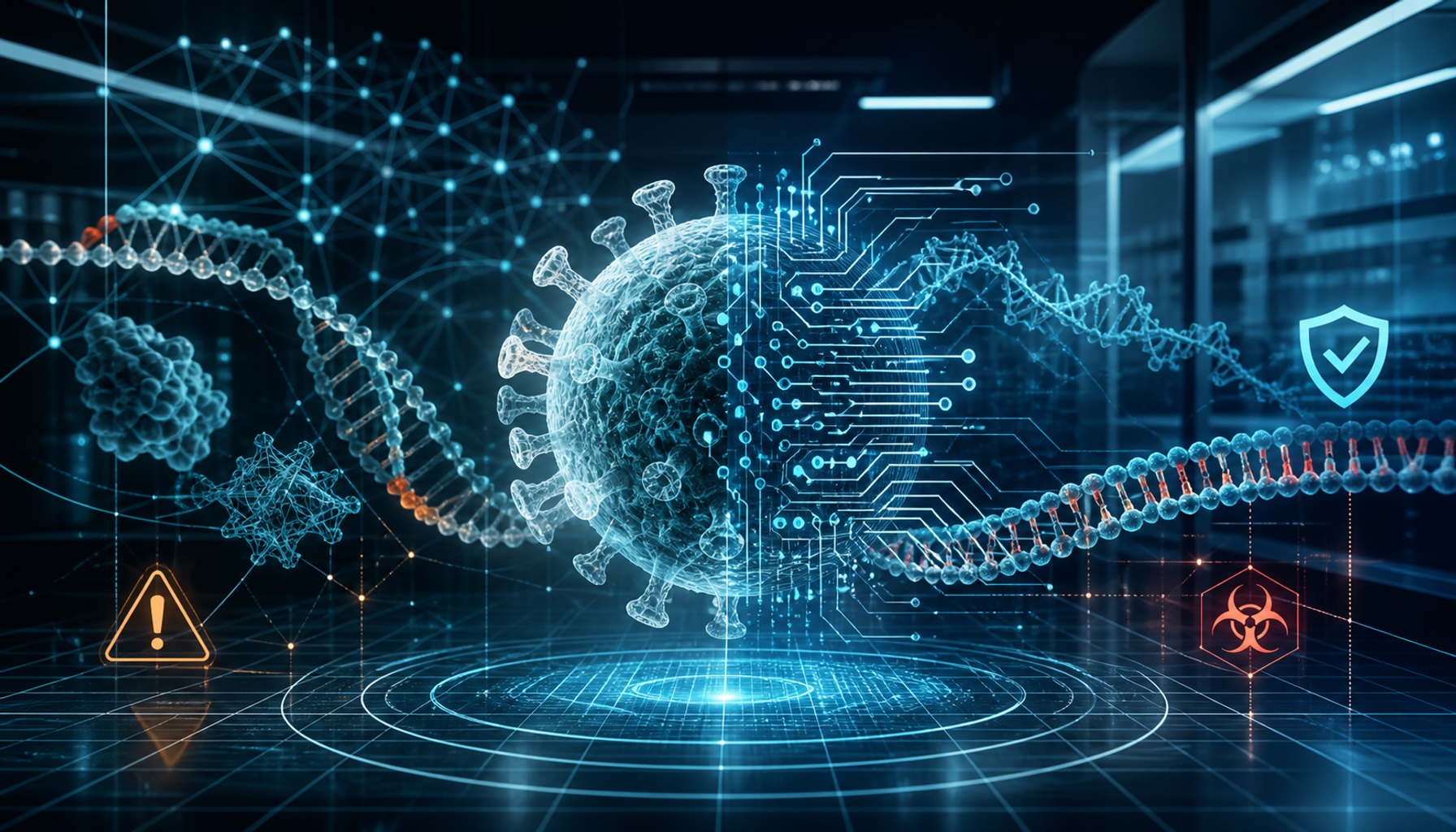
Artificial Intelligence (AI) has become a transformative tool in virology, offering new possibilities for virus design with significant implications for vaccine development and biosecurity.
Key Findings
AI in Virus Design
AI algorithms are capable of analyzing extensive viral genome datasets to identify patterns and predict viral evolution. This enables scientists to design synthetic viruses for research, such as studying viral behavior or testing vaccines. For instance, researchers at the University of California, San Francisco, have used AI to design a virus that, while harmless, can mimic the behavior of more dangerous viruses to study immune responses.
Potential Applications
- Vaccine Development: AI-designed viruses can enhance vaccine efficacy by simulating immune responses to various viral structures.
- Biosecurity Concerns: The technology’s potential misuse to create harmful pathogens raises ethical and safety concerns.
Research and Development
A study in Nature demonstrated AI’s ability to predict viral protein structures, crucial for understanding viral infection mechanisms and immune responses. AI tools, including deep learning models, are trained on existing viral data to generate new viral sequences for laboratory testing.
Ethical Considerations
The dual-use nature of AI in virology presents ethical challenges. While it can advance public health, it also poses risks if misused. Researchers call for stringent regulations and oversight in AI-driven virus design.
Current Research Initiatives
Numerous institutions are leveraging AI in virology research, focusing on understanding emerging viruses and developing countermeasures.
References
- Scientific American: Artificial Intelligence Can Design New Viruses
- Forbes: How Artificial Intelligence is Being Used to Design New Viruses
- Nature: Discusses AI’s role in predicting viral protein structures (access restricted).
Conclusion
The convergence of AI and virology offers exciting opportunities and challenges. While AI can drive advancements in vaccine development and viral understanding, it also requires careful ethical consideration and risk mitigation. Continued research and dialogue are essential to maximize AI’s benefits while minimizing potential threats.